Keep sharing good news without ads.
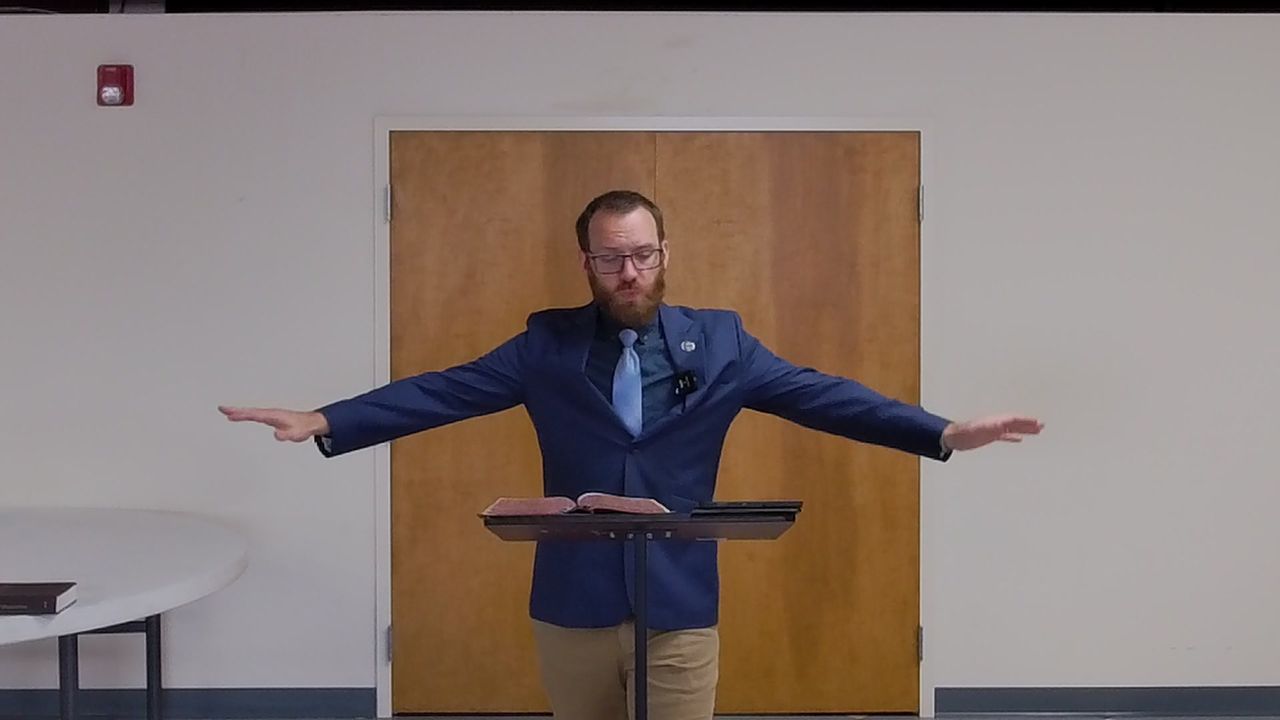
Bless the Lord, Oh My Soul Psalm 103 Sermon by Reed Kerr
Hill City Reformed Baptist Church Lynchburg, Virginia
Amen. Good morning, beloved. This morning, this morning we are pausing from the book of Galatians. I invite you to turn to Psalm 103. That will be our text this morning. Psalm 103 is a Psalm of David.
Just as a side note in the beginning, you'll notice in your Bible that at the start of most of the Psalms, there's usually a short phrase of text that precedes verse one. Psalm 103 simply states a Psalm of David.
These are sometimes called the superscription of the Psalm because they come before verse one. These are different than the headings in your Bible that are provided by the editors and the translators as a way of helping you find texts and identify them a little more clearly.
Those are more like supplemental. But these inscriptions are a little different. They're not like the headings. They're not like the chapter and verse numbers that we've talked before about how those are not original to the text.
Those are supplied by translators for us. They're not part of the Greek or Hebrew text. But these inscriptions, they are, which is interesting. They're different. They're part of the Hebrew canon. The 150 Psalms are 150 distinct Psalms that are numbered in the Hebrew canon.
They aren't 150 chapter divisions that were added later for our convenience. Their division and makeup and structure are part of God's word handed to us, delivered by the Holy Spirit. Now, we don't know for sure who collected the Psalms and arranged them.
There's various authors. David wrote a great many of them. Throughout most of history, people have agreed that it was either likely David or later Ezra that did the compiling and organizing of the Psalms into the structure of 150 that we have.
It's feasible to me that David did the initial collecting and then Ezra later did the final arrangement and editing into the structure that we have today during the Babylonian exile or shortly thereafter.
But all that to say, these superscriptions are part of the text. Those of you that are into textual criticism might be interested to know that they are in the Greek Septuagint, which was the translation of the Old Testament that the Hebrews used in the days of Jesus.
And they're also found in the Dead Sea Scrolls and in, of course, the Masoretic texts that our English Bibles are translated from. There are some textual questions, of course, with these superscriptions that people can debate about.
So there's some musical terms in there that have been difficult to translate with precision. We don't always know exactly what they meant. But my point is, when Psalm 103 has this inscription provided for us that says that this is a Psalm of David, I think we are to take that as from scripture telling us who wrote these words.
This is a Psalm of David. Why Psalm 103 this morning? Our study through Galatians is revealing to us the gospel of God's grace. In Paul's writings in Galatians and Romans, these precious texts to the church that sparked the Protestant Reformation that swept through Europe and then spread here to America by God's grace.
It has focused on this doctrine of justification by faith alone. That was what sparked this revival, this restoration of the preaching of the true gospel of grace that saves sinners. We've already seen, and we'll continue to see that as we work through Galatians.
And the good news of the gospel is that sinful men can be reconciled to a holy and righteous God, not by their own works, but by faith through Christ in his righteousness. His righteousness imputed to us.
This is an act of God. Justification is an act of God. It's an act of his free grace wherein he pardons all our sins and accepts us as righteous in his sight only for the righteousness of Christ imputed to us that we then receive by faith alone.
In this way, beloved, we are united to Christ. Our sin is put on him and he bore the full penalty for it on the cross. And his righteousness is imputed to us. This is an act of God's free grace. It is he who, as the psalmist says in the text that we will read in just a moment, it is he that redeems your life from destruction, who crowns you with loving kindness and tender mercies, who has not dealt with us according to our sins.
The mercy of the Lord is from everlasting to everlasting. This is the message of Paul in the New Testament. It is the message specifically of Galatians. And it is also the message of this psalm this morning.
Psalm 103 teaches us these great truths and how we are to respond to them. So let us read now the word of our Lord. Psalm 103, a Psalm of David. Bless the Lord, O my soul, and all that is within me. Bless his holy name.
Bless the Lord, O my soul, and forget not all his benefits, who forgives all your iniquities, who heals all your diseases, who redeems your life from destruction, who crowns you with loving kindness and tender mercies, who satisfies your mouth with good things so that your youth is renewed like the eagles.
The Lord executes righteousness and justice to all who are oppressed. He made known his ways to Moses, his acts to the children of Israel. The Lord is merciful and gracious and slow to anger and abounding in mercy.
He will not always strive with us, nor will he keep his anger forever. He has not dealt with us according to our sins, nor punished us according to our iniquities. For as the heavens are high above the earth, so great is his mercy toward those who fear him.
As far as the East is from the West, so far has he removed our transgressions from us. As a father pities his children, so the Lord pities those who fear him, for he knows our frame. He remembers that we are dust.
As for man, his days are like grass. As a flower of the field, so he flourishes. For the wind passes over it and it is gone, and its place remembers it no more. But the mercy of the Lord is from everlasting to everlasting on those who fear him, and his righteousness to children's children, to such as keep his covenant, and to those who remember his commandments to do them.
The Lord has established his throne in heaven, and his kingdom rules over all. Bless the Lord, you his angels, who excel in strength, who do his word, heeding the voice of his word. Bless the Lord, all you his hosts, you ministers of his who do his pleasure.
Bless the Lord, all his works, in all places of his dominion. Bless the Lord, O my soul. Our Father in heaven, we thank you for this text, this beautiful expression of your loving kindness and mercy toward us, and your faithfulness that never changes.
That is the same through all ages, for us and for our children and our children's children, for many generations, we can know that you never change. Father, this morning would you help us to bless your holy name, as we tremble before the greatness of your majesty, may we revel in the joy of knowing that we are yours.
We are the sheep of your pasture, and you know our frame, and you love us perfectly in Christ, our King, whose dominion will never end. Help me this morning to proclaim Christ, help us, your people, to bless your holy name, amen.
Charles Spurgeon in his treasury of David, his commentary on the Psalms, said that he thinks David wrote this in his later years when he had a higher sense of the preciousness of pardon, and a keener sense of sin than in his younger days.
His clear sense of the frailty of life indicates his weaker years, as does this very fullness of his praiseful gratitude. I think that's a astute reflection. Spurgeon went on to speak of how much he loves this Psalm.
He said, it is as the apple tree among the tree of woods, and its golden fruit has a flavor such as no fruit ever bears unless it has been ripened in the full sunshine of God's mercy. It is man's reply to the benedictions of his God.
He goes on, he says, there is too much in this Psalm for a thousand pens to write, and it is one of those all-comprehending scriptures which is a Bible in itself, and it might alone almost suffice for the hymn book of the church.
Charles Spurgeon loved this Psalm, and rightly so. This is a beautiful expression of the gospel of grace and the faithfulness of God. As we look and study this passage this morning, I think we see three clear sections here.
First, we see this address to the individual, to one's own soul. I'm framing this as the king addresses his own soul. And then in verses, that's one through five, and then in verses six through 18, we see the king addressing the community of the faithful.
And then in verses 19 through 22, we see the king addressing all of creation. As a matter of first importance, I want to push you to see that when we read the Psalms, they are first and foremost about the Lord Jesus Christ.
It was David who originally penned these words, but David is a type of Christ. And as he sings this Psalm, David is showing us the prayers, the cries of our Savior Jesus. I think we are right to read the Psalms as the prayers of Jesus.
Every blessing in this Psalm is found in Christ because all of the devotion that this Psalm demands was performed by Christ. He perfectly lived it all out. David, as a type of Christ, as he sings this Psalm, he shows us what we ought to be striving for that Christ actually accomplished.
Christ did this perfectly and without sin. I don't think I'm off base to say that the Psalms are the prayers of Jesus. When the Psalms speak of the righteous, whether it's the righteous one or the righteous community, Jesus Christ is the righteous one.
And we are made righteous in him because of his active obedience. Christ is our sinless head. And when we see the Psalms confessing sin and pleading for forgiveness, we should see this as Christ as our covenant head who took our sins upon him, praying for our forgiveness.
Remember, beloved, Christ is our covenantal head. He is the head of this body of the church of those who are called out by his name. And he submitted to the baptism of repentance of John the Baptist. And he submitted to the cross, bearing the shame of guilt and sin.
And in this way, he pleads for our forgiveness for the father. He who knew no sin became sin for us that we might become the righteousness of God in him. So with that framing in mind, we see the King here exhorting himself to bless the Lord.
Bless the Lord, O my soul. This is the cry of this Psalm. We see it in verse one and again in verse two. And then we see it at the end of the Psalm. It bookends this Psalm. That is the cry of Psalm 103.
This should be instructive to us. All that is within us should bless his holy name. He is holy, holy, holy, and his name is holy. This is the Jehovah God, the eternal self-existent one. I am that I am.
He is the one who was and is and is to come. With him, there is no shadow of turning. And so we bless his holy name. And then right away in verse two, we see that yes, we are to bless him because he is holy, but we must also remember his benefits toward us.
We sang this this morning. He is gracious to us. He is merciful. He has blessed us and given us these blessings that we could never deserve. David then strings together here these five benefits. We see them here in these verbs.
He forgives, he heals, he redeems, he crowns, and he satisfies. Again, I'll quote Spurgeon here. David selects a few of the choice pearls from the casket of divine love, threads them on the string of memory, and hangs them about the neck of gratitude.
I love Spurgeon. The first of these five is the forgiveness of sin. Beloved, this is the fountain of all of God's graces toward us. You cannot know and appreciate any of God's graces without first laying hold of this great truth.
The old catechism asks, how many things must you know to live and die in the joy of God's comfort? And it answers three, three things we must know. First, how great my sin and misery are. Second, how I am delivered from all my sins and misery.
And third, how I am to thank God for such a deliverance. This is the message of this psalm, really. The whole psalm is about this. Knowing that we have been delivered from all of our sins and miseries, we must now thank God for this great deliverance.
We must bless his holy name for who he is and for what he has done. The second of these five benefits flows from this forgiveness is that he heals all our diseases. Now there's obviously a physical aspect to this.
And this verse should be a comfort to us when we are dealing with physical infirmity, when we have pains and suffering in this life, when we are sick, when we feel the frailty of our bodies, we know that God is the healer.
He is the one we should go to and find our comfort and peace in. Anytime we experience physical healing in this life, it is a gift from God, a gift that we do not deserve. It is a grace that he has bestowed upon us.
But this word translated diseases here, it's the same root word spoken regarding the sufferings of the suffering servant in Isaiah 53, that he has borne our griefs. It's related to some of the descriptions given in Jeremiah regarding the exile and the sufferings of the people of Israel.
So I think it's fair to apply this more broadly. For he is indeed the God who brings healing to all manner of suffering and hardship in your life. Beloved, recognize God's grace toward you in this way and praise him for it.
Praise him for it. The third benefit here in this first section that David mentions is that he redeems your life from destruction or from the pit, that state of corruption and decay, the grave. Indeed, this truly is a redemption for the wages of sin is death.
We are all because of our sin in our father, Adam, we are all in this life staggering toward this corruption of death and decay, toward that final ultimate destruction. But for the grace of God, he has redeemed us from the curse of sin and delivered us out of our sin and misery that we might now be his people, not destined for damnation, but destined for glory in Christ for his name's sake.
Fourth, he not only redeems us from destruction, but he crowns us with loving kindness and tender mercies. God's loving kindness, his steadfast love, his compassions indeed are a crown upon your head, beloved, if you are in Christ.
These are a glory bestowed upon you by the king of kings. He fills our lives with goodness and truth and beauty, and it is a crown upon our heads. We are to wear this, this glory of God as we go about our lives as vessels of glory that he has poured into us.
And then fifth, he satisfies us with good things so that our youth is renewed. Beloved, do you recognize and bless him for the good in your life? Even the physical good things that he has given you, I fear too often we're prone to either a never-ending hedonistic pursuit of worldly pleasures where we're never satisfied and we just hunger for more and more at all times.
Or on the other hand, I think some of us have a tendency towards a stoic minimalism where we act like pleasure is unfit for a holy lifestyle. This should not be the case. We should delight that our father is good and kind enough to satisfy our mouths with good things.
Satisfy, meaning a true and sincere enjoyment with gratitude. We're not monks, we're not meant to be monks, but we are to be contented with satisfaction that isn't carried away by insatiable desires. Church, we need to recover both the practices of fasting and feasting.
There is a time for denial and a time for delight. God's word instructs us in both and both, when pursued righteously, should cause us to bless the Lord. We need to regularly remind ourselves that the material pleasures of this world are fleeting and Christ is all we need.
But also, we need to remind ourselves of the truth that our God is good and kind and gives us good things to enjoy, to satisfy us, that we would bless his holy name. So that's an overview of this first section, this call for the individual to bless the Lord.
Now, the second and largest section of this psalm focuses on the corporate aspects. Spurgeon says that the psalmist magnifies the attributes of Jehovah as displayed in his dealings with his people. Matthew Henry calls it an exhortation to the church and to all men to bless God for the constancy of his mercy.
Now, I think we're right to think in terms of the church when we think of this text, this scripture. I know this is an Old Testament text, but the Greek word in the New Testament that we get the word church from speaks of an assembly that is called out.
I think we could rightly argue this is synonymous with the elect, those who are called out from the world to be his people, his congregation, his own bride. And so if you recall, Paul in Romans 4, in making the case that even Abraham was justified by faith, and so the promise made to Abraham was not received by circumcision.
It was not received by his physical seed merely, but it was received even by Abraham through faith. And so Romans 4 .16 says, therefore it is of faith that it might be according to grace so that the promise might be sure to all the seed, not only to those who are of the law, but also to those who are of the faith of Abraham, who is the father of us all.
This is who's in view in this section of the Psalm. In the context of a church that was enduring devastating persecution, we find comfort that the Lord executes righteousness and justice for all who are oppressed.
In Exodus 33 .13, Moses prayed, let me know your ways that I may know you. God indeed made himself known to Moses. He revealed himself to Moses. And he made his acts known to the nation of Israel. This is the God who gave the law to the nation of Israel.
And when he did in Exodus 20, he preceded the giving of the law by saying, I am the Lord, your God, who brought you out of the land of Egypt, out of the house of bondage. And then our Psalm this morning, Psalm 103 in verses eight and nine has this very direct reference to Exodus chapter 34, verses six and seven.
I'm gonna read from Exodus 34. And the Lord passed before Moses and proclaimed the Lord, the Lord God, merciful and gracious, long suffering and abounding in goodness and truth, keeping mercy for thousands, forgiving iniquity and transgression and sin.
Beloved, this is the constancy of his grace and mercy toward his church, his bride, his elect. And yet the gospel shines forth in radiant splendor. Look at verse 10 of our Psalm. He has not dealt with us according to our sins nor punished us according to our iniquities.
I'm reminded of another Psalm that I love. Psalm 130 says, if you, Lord, should mark iniquities, O Lord, who could stand? This is his mercy. Beloved, that he does not punish us for our sins as we rightly deserve.
Instead, he punished his son. The Lord Jesus Christ upon the cross bore our iniquity, our shame. He bore the wrath of the father. Verses 15 through 18, then emphasize the extent of his mercy. Higher than the heavens, further than the east from the west, as the love of a good father pities his children, this is his love toward those who fear him, those who know him, those who are his, the sheep of his pasture.
As we sang this morning, he knows them and he cares for them and he loves them. The king then contrasts the finite and changeable nature of man with the infinite and unchangeable nature of the mercy of God.
This is his constancy. We see this in verses 14 through 18. I'll read them again. For he knows our frame, he remembers that we are dust. As for man, his days are like grass, as a flower of the field, so he flourishes for the wind passes over it and it is gone and its place remembers it no more.
But the mercy of the Lord is from everlasting to everlasting on those who fear him and his righteousness to children's children, to such as keep his commandment and to those who remember his commandments to do them.
Beloved, as you think of your children, take comfort in knowing that one day, though you will lie in the grave, your children will still be in the hands of a good and loving God who is faithful and merciful to you all your days.
So he will be faithful and merciful to your children in Christ. Beloved, pray for your children. Pray that they would see the glory of Christ, that they would turn from their sins, turn from the deceptions and lies of this age and place their anchor in Christ, for he never changes.
Children, that is my prayer for you, that you would find Christ our sure and steady rock. The lies of this world are all around us and they're ever-changing and they're deceptive. Children, do not listen.
But instead, turn to the one who has spoken to us in his word, the one who loves us, the one who gave his own son, that we might be his people. Turn from the deceitfulness of sin. So if the first point in this text was for the individual believer to bless the Lord for all his benefits, this second point was that for the church of God, the bride of Christ, to bless the Lord for his loving kindness to us.
Now third and finally, the scope broadens out even further. From the microcosm of the church to the entire cosmos, the created order and everything in it, things seen and things unseen, beings and powers and authorities and principalities and rulers that we cannot even fathom, but they're real.
This isn't just flowery language. These are created sentient beings that are given domains to rule over, to work, to do his will, to obey his word. They serve in his kingdom. And we're blind to it. But God has a created order, a cosmos that he rules over absolutely.
And it's all, all for his glory. His angels who excel in strength, they heed the voice of his word. The king here instructs them, bless the Lord. His hosts, these heavenly servants and ministers who do his pleasure, they too are to bless the Lord.
And then lastly, a description that encompasses all of creation, all his works in all places of his dominion. There is nothing that is not a work of his hands. Everything that is comes from him and will answer to him for he is the ruler, the potentate.
Everything that exists, everything above the earth, on the earth, beneath the earth, seen, unseen, past, present, future, all that exists exists to glorify and magnify and praise to bless the Lord. This is the anthem of all of creation.
And the psalmist ends by taking part in this anthem. Beloved, when we bless the Lord, we are doing what all of creation exists to do. We are taking part in that anthem of creation. Some of the old hymn writers would call it the music of the spheres.
This exists for God's glory. Everything exists for God's glory. And we are called to glory in him, to bless his holy name for he rules all. His dominion is everlasting. That should make us tremble. What an honor and privilege.
What a duty we have to glory in God. In conclusion, all of these imperatives, to fear God, to keep his covenant, to remember his commandments, to do them, to bless the Lord. These are all things, beloved, that we fail at daily.
Even the great King David, he failed at them every day. But beloved, the Lord Jesus Christ did not fail. He cannot fail. Our Lord walked this earth and he embodied this psalm perfectly. He did what David could not do.
He did what you and I cannot do. He did what no one could do. He was the sinless lamb of God who came to take away the sins of the world. Heed the warnings here. Destruction comes swiftly to those who will not heed them.
But if you would turn to Christ in faith, he is abundant in mercy. His steadfast love is ready to pardon all your sins and accept you as righteous in his sight, only for the righteousness of Christ imputed to you.
Beloved, it's faith. Faith is the instrument whereby we can be made righteous. If you were in Christ, we must strive to follow his example, to walk in his ways. Beloved, look to this psalm to stir up your soul with the prayers of the King.
Remember all his benefits and his mercy toward you, his mercy toward his people through generations to your children and your children's children. Remember his kindness and his redemption from destruction.
And let the words of Holy Scripture move you to see him for who he is, that your soul may bless the Lord. I'll close with the words of Jude. Now to him who is able to keep you from stumbling and to present you faultless before the presence of his glory with exceeding joy.
To God, our savior, who alone is wise, be glory and majesty, dominion and power, both now and forever. Amen. Let us pray. Our great God and Father, we praise you for your mercy toward us. We thank you for your benefits that you have lavishly poured out on us for your namesake, that you might be glorified, that you may be lifted high and exalted as the king and creator and ruler and the merciful, loving father, the redeemer, the savior.
Father, we thank you for Christ. For without him, we have no hope, no standing, no inheritance, nothing but eternal damnation apart from you. But praise be to God for his shed blood. May we be a people, may we be a church that exalts your name, that glories in these truths, that frequently remembers and calls to mind your many benefits, that your name would be blessed above all for all eternity.
In Jesus' name we pray, amen.